


Published 9 August 2022; updated 10 March 2026
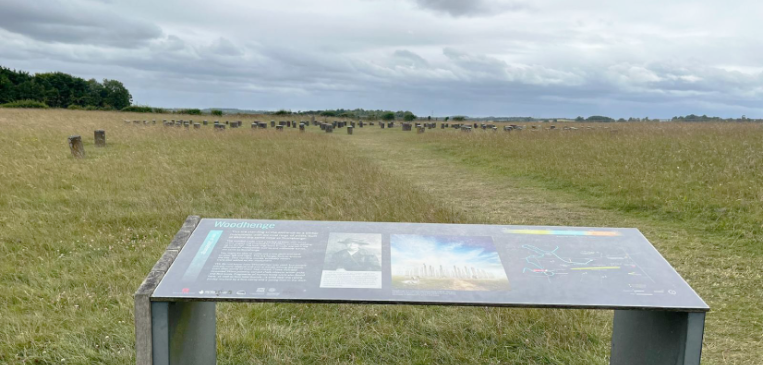
Just two miles from the world-famous Stonehenge lies one of Britain’s most fascinating prehistoric sites: Woodhenge.
Although far less well known than its stone neighbour, Woodhenge once consisted of a series of massive timber circles that formed an important ceremonial monument within the prehistoric landscape of Wiltshire.
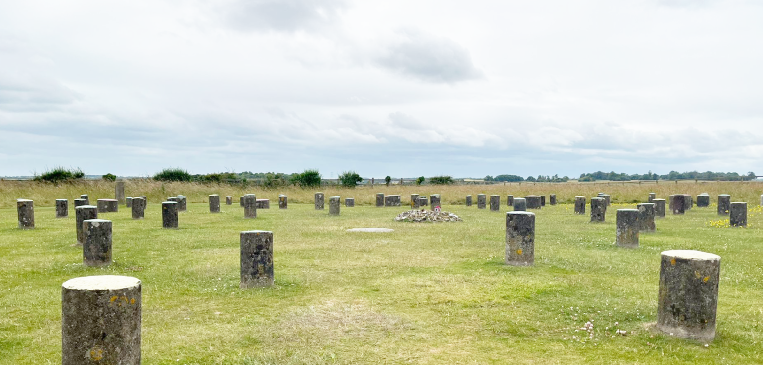
Today, visitors can still explore the site, where concrete markers show the positions of the ancient wooden posts that once stood here over 4,500 years ago. Because it sits within the wider Stonehenge World Heritage landscape, Woodhenge offers a fascinating glimpse into the rituals, communities, and engineering skills of Neolithic Britain.
In this guide you’ll learn:
- what Woodhenge is
- why it was built
- how it relates to Stonehenge
- how to visit the site today
Woodhenge is located near Amesbury in Wiltshire and is free to visit. The site is open year-round and can be accessed via Countess Road. There is a small car park nearby and the monument is only a short walk from Durrington Walls. If you’re planning a full visit to the area, see our complete Stonehenge visitor guide.
Adults: £73 Child: £63
Our popular half-day tour…
Direct Stonehenge Express Tour from London
Access to this world heritage site, return coach from central London, multilingual audio guide to Stonehenge, a perfect way to enjoy a stress-free experience.
What Is Woodhenge?
Woodhenge is a prehistoric timber circle monument built during the late Neolithic period, around 2500 BC, roughly the same time Stonehenge was being constructed.
Instead of massive stone blocks, Woodhenge consisted of six concentric rings of large wooden posts. Archaeologists believe these posts may have supported ceremonial structures or acted as symbolic markers used during rituals.
The monument was first discovered in 1925 through aerial photography, when unusual circular patterns were spotted in a wheat field near the village of Durrington. Excavations soon revealed the remains of large post holes arranged in precise circles.
These post holes showed that the structure was carefully planned, with the largest outer circle measuring around 110 metres in diameter.
Although the original wooden posts have long since decayed, their positions are now marked with concrete pillars, allowing visitors to visualise the scale of the ancient structure.
Where Is Woodhenge?
Woodhenge is located near the town of Amesbury in Wiltshire, within the wider Stonehenge World Heritage landscape.
The site sits approximately:
- 2 miles (3 km) northeast of Stonehenge
- next to the massive Neolithic settlement of Durrington Walls
- a short distance from the River Avon
Because the monuments in this area were built as part of a connected ceremonial landscape, many archaeologists believe Woodhenge was closely linked to both Stonehenge and Durrington Walls.
Visitors exploring the area often combine several nearby prehistoric sites in one trip.
You can learn more about visiting the main monument in our guide to Stonehenge tickets and entry options.
Woodhenge vs Stonehenge
Although their names sound similar, Woodhenge and Stonehenge were very different structures.
| Feature | Woodhenge | Stonehenge |
|---|---|---|
| Main material | Timber posts | Large stones |
| Construction date | Around 2500 BC | Around 3000–2000 BC |
| Purpose | Ceremonial / ritual site | Ceremonial monument and burial site |
| Discovery | Found in 1925 | Known since antiquity |
| Visiting | Free open site | Ticketed attraction |
Many researchers believe Woodhenge formed part of a ritual landscape used for ceremonies involving both the living and the dead.
One theory suggests:
- Wood structures represented the world of the living
- Stone structures represented permanence and the ancestors
This symbolic contrast could explain why Stonehenge and Woodhenge were built relatively close together.
If you’re planning to explore the entire prehistoric landscape, many travellers choose a guided Stonehenge tour from London that includes transport and historical commentary about the surrounding sites.
The Discovery of Woodhenge
Woodhenge remained hidden for thousands of years until it was discovered by chance in the early 20th century.
In 1925, aerial archaeologists flying over the Wiltshire countryside noticed strange circular patterns in a wheat field near Durrington. The patterns revealed the outlines of buried structures beneath the soil.
Excavations soon revealed a complex arrangement of post holes forming several concentric circles.
Archaeologists also discovered:
- animal bones
- pottery fragments
- flint tools
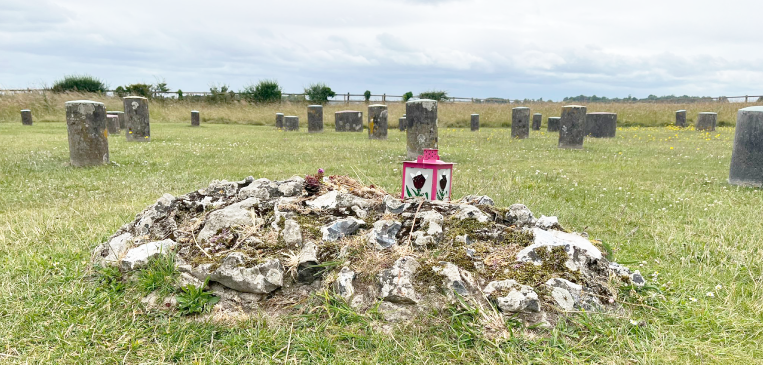
One of the most remarkable discoveries was the burial of a young child found within the monument. This suggests that the site may have had a ceremonial or ritual function.
The careful arrangement of the posts showed that Woodhenge was deliberately designed and constructed with sophisticated planning, much like Stonehenge itself.
What Did Woodhenge Look Like?
Originally, Woodhenge would have looked dramatically different from the open grassy field visitors see today.
The monument consisted of six rings of enormous timber posts, arranged in oval patterns. Some of these posts were more than 7 metres tall and may have supported horizontal beams or roofed structures.
The circles created a large ceremonial enclosure where gatherings, rituals, or seasonal events may have taken place.
Archaeologists estimate the structure may have contained over 150 wooden posts, forming an impressive architectural monument in the landscape.
Today, the wooden posts are represented by concrete cylinders, each marking the location of an original post hole.
Walking around the site allows visitors to imagine the scale of the ancient structure and how it might have looked thousands of years ago.
Why Was Woodhenge Built?
The exact purpose of Woodhenge remains uncertain, but several theories exist.
Ceremonial Gatherings
One possibility is that Woodhenge served as a gathering place for ceremonies or seasonal rituals. Its circular layout suggests it may have been used for communal events linked to the agricultural calendar.
Connection to Durrington Walls
Nearby Durrington Walls was once one of the largest Neolithic settlements in Britain. Archaeologists believe the people who lived there may have built and used Woodhenge as part of their ritual activities.
Processional Route
Some researchers believe a ceremonial route may have linked:
- Durrington Walls
- Woodhenge
- the River Avon
- Stonehenge
This processional landscape may have played a role in ancient ceremonies.
Can You Visit Woodhenge Today?
Yes — and one of the best things about Woodhenge is that it’s completely free to visit.
Unlike Stonehenge, which requires tickets and timed entry, Woodhenge is an open site accessible at any time.
Visitors can walk freely around the monument and explore the surrounding countryside.
Facilities are limited, but nearby Amesbury and the Stonehenge visitor centre offer:
- parking
- cafés
- toilets
- exhibitions about the Stonehenge landscape
If you’re planning to visit the main monument afterwards, it’s best to book Stonehenge entry tickets in advance, especially during the busy summer months.
Walking Between Stonehenge and Woodhenge
One of the best ways to experience the prehistoric landscape is to walk between Stonehenge and Woodhenge.
The distance between the two monuments is about 2 miles (3 km) and the route passes through some of the most archaeologically rich land in Britain.
Along the way you’ll pass:
- Durrington Walls
- the River Avon
- ancient earthworks
- Neolithic burial mounds
Many visitors enjoy this walk because it provides a deeper understanding of how the monuments relate to each other within the wider ceremonial landscape.
You can see the full route in our guide to the best walks around Stonehenge.
Visiting Tips for Woodhenge
If you’re planning to visit Woodhenge, a few simple tips can make your trip more enjoyable.
Visit early or late in the day
The site is much quieter than Stonehenge, but visiting in the early morning or evening often provides the best atmosphere.
Combine it with nearby sites
Because the monuments are so close together, many visitors explore several sites in one trip.
Good combinations include:
- Stonehenge
- Woodhenge
- Durrington Walls
Wear suitable footwear
The site sits in an open grassy field, so the ground can become muddy during wet weather.
Frequently Asked Questions
Yes. Woodhenge is completely free and does not require a ticket.
Woodhenge is around 2 miles (3 km) from Stonehenge and can be visited on the same day.
No. The original wooden posts have decayed, but their positions are marked with coloured concrete posts showing the original layout.
Yes, especially if you are interested in prehistoric Britain or want to explore beyond Stonehenge. It provides valuable historical context with far fewer visitors.
Yes, it is possible to walk between the sites, although there is no direct signed path for the entire route. Proper planning and navigation are recommended.
Interested in checking out some of our…
STONEHENGE TOURS BY COACH
All of our full-day and half-day London to Stonehenge Tours involve central London pick up and drop off at the end of the tour. Visitors will travel in a luxury air-conditioned coach with a knowledgeable guide to assist them on their tour of the best attractions in the UK. Often it’s an early start, so you want to travel comfortably; many coaches include free wifi to keep in touch during the journeys, look up what’s to come or share your experiences online. You don’t need to worry about parking far away at Stonehenge either when travelling on one of our luxury coaches as the coach parks near the main car part and just a short walk to the visitor centre and main entrance.
