
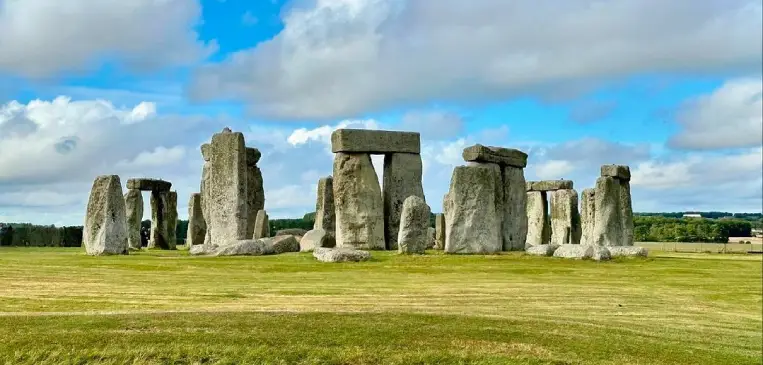

Tickets for disabled access
You can purchase disabled access tickets online as normal tickets. Carers travelling with a disabled person do not need to purchase a ticket, instead, on the day they just need to explain at the entrance that they have a ticket for the disabled person and that they require a free carers ticket to accompany the disabled traveller.
Do carers who travel with a disabled person require a ticket?
Carers travelling with a disabled person to and around Stonehenge require a ticket; however, there is no charge for this ticket. If you purchase a ticket online, you need to speak to English Heritage on the day at Stonehenge as explained above. If you see Stonehenge as part of a tour package with a separate company, you may need to pay an additional charge for the carer; however, you will need to speak to the tour company separately.
Stonehenge welcomes disabled visitors and people with access needs from across the world, with facilities designed to make the site as inclusive and comfortable as possible. This guide explains wheelchair access, mobility scooters, carer tickets, accessible parking, toilets, and what to expect when visiting the Stone Circle.
Whether you are planning ahead or visiting on the day, this page is designed to help you make informed decisions about your visit. Visitors requiring accessible facilities should review Stonehenge ticket options and entry times in advance of their visit.
Accessibility at Stonehenge at a glance
- Step-free access across the main visitor areas
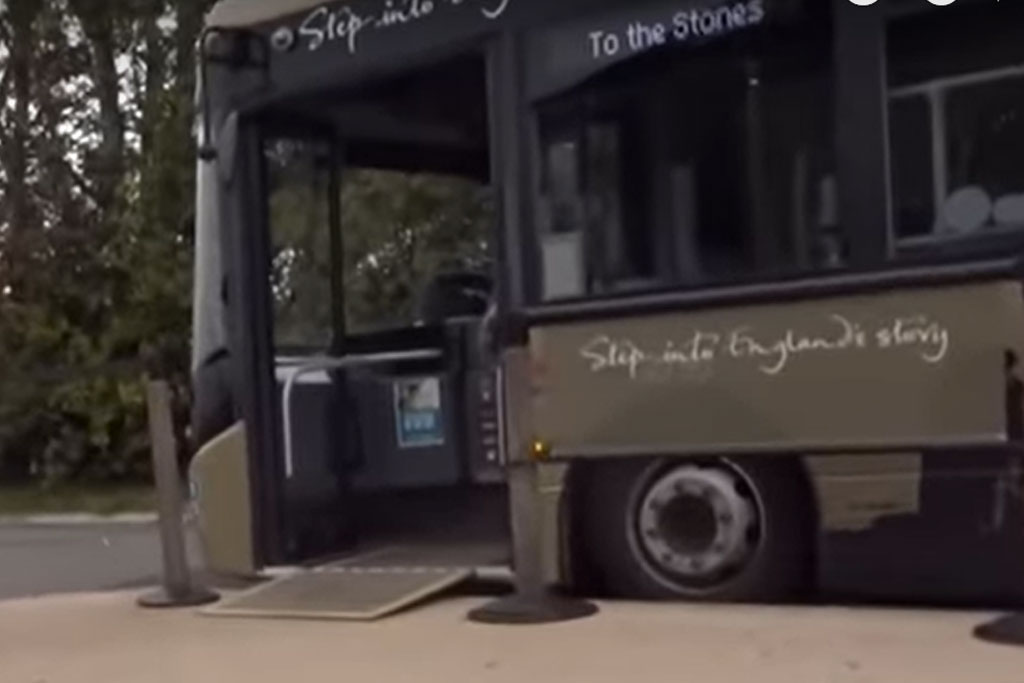
- Wheelchair-friendly shuttle transport (as seen above) to the Stone Circle
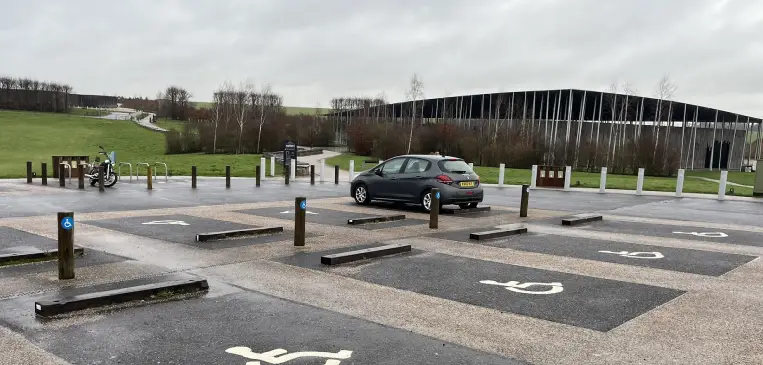
- Designated Blue Badge parking close to the Visitor Centre (as seen below)
- Accessible and Changing Places toilets available
- Free entry for carers or essential companions
- Assistance dogs welcome
Tickets for disabled visitors and carers
Disabled visitors book standard admission tickets in the usual way.
If you require support during your visit, one essential carer or companion is normally admitted free of charge. This can often be arranged either when booking online or when you arrive at the site. If you are visiting as part of a guided tour or package, carer policies may vary, so it’s worth checking before booking.
No proof of disability is normally required on the day, but staff may ask basic questions to ensure the correct support is provided.
Wheelchair access at Stonehenge
Is Stonehenge suitable for wheelchair users?
Stonehenge is largely wheelchair accessible, with step-free routes connecting the Visitor Centre, shuttle drop-off points, and the Stone Circle viewing areas.
Paths are a combination of:
- smooth, hard-surfaced walkways
- compacted paths and reinforced grass surfaces closer to the stones
Because parts of the route pass over open grassland, ground conditions can change after heavy rain, which may affect manual wheelchairs or smaller front wheels.
Slopes and gradients
There are no stairs on the main visitor routes, but you may encounter gentle slopes in places. These are gradual rather than steep and are managed as part of the site’s natural landscape.
Accessible shuttle bus to the Stones
The distance between the Visitor Centre and the Stone Circle is around 1.5 miles. To make this manageable for everyone, regular shuttle buses operate throughout the day.
- Wheelchair-accessible vehicles are in constant rotation
- No advance booking is required
- Journey time is approximately 10 minutes
Mobility scooters
Standard Class 2 mobility scooters can usually be accommodated on the shuttle buses, provided they fall within typical size limits. Larger or longer scooters may need alternative arrangements, so checking with staff on arrival is recommended.
If you prefer, you can also travel part-way and walk or wheel the remaining distance at your own pace.
Disabled and Blue Badge parking
Designated disabled parking bays are located close to the Visitor Centre, reducing the distance from your vehicle to site facilities. These bays are clearly marked and suitable for vehicles with ramps or hoists.
Arriving earlier in the day can make it easier to secure a bay with extra space if you need side or rear access.
Accessible toilets and Changing Places
The Visitor Centre includes:
- standard accessible toilets
- a Changing Places toilet with additional space and specialist equipment
Please note that there are no toilet facilities at the Stone Circle itself, so it’s best to use the toilets at the Visitor Centre before travelling out to the stones.
Assistance dogs and service animals
Registered assistance dogs are welcome throughout the site, including near the Stone Circle. Drinking water is available, and staff are happy to help if you need support during your visit.
Sensory, visual, and hearing access
Stonehenge offers several features that support visitors with sensory or cognitive access needs:
- Downloadable audio guides that can be played on your own device
- Options suitable for visitors with visual impairments
- Quiet open spaces for those who may feel overwhelmed indoors
- Tactile elements in the exhibition areas near the Visitor Centre
If you are visiting with someone who is autistic or neurodivergent, planning a quieter visit time (early morning or later afternoon) can help reduce sensory overload.
Can wheelchair users get close to the stones?
The main Stone Circle route allows wheelchair users to view the stones from close range using managed paths. However, there is no fully paved path inside the inner circle, and ground conditions can vary.
If close proximity to the stones is essential for your experience, visiting during dry weather and speaking with staff on arrival will help you choose the most suitable route.
If you’re planning to visit during special times of year, check our solstice guide for information on both the summer and winter solstice events at Stonehenge.
Frequently Asked Questions
Yes. The Visitor Centre, shuttle transport, and Stone Circle viewing routes are designed to accommodate wheelchair users, although some outdoor surfaces are weather-dependent.
Yes. Mobility scooters are welcome, and many can use the shuttle bus. Very large scooters may need additional advice from staff.
In most cases, one essential carer or companion is admitted free of charge. Policies may differ for organised tours.
Yes. A fully equipped Changing Places toilet is available at the Visitor Centre.
There are 22 disabled spaces available in the car park at Stonehenge, these spaces are also very close to the visitor centre and just 100 metres from the main entrance where you can purchase tickets for Stonehenge.

There are disabled toilets available, as well as a changing place that comes with a hoist. The toilets are located in the Stonehenge Visitor Centre as there are no toilet facilities at the Stones. Wheelchair accessibility is good for the toilet areas, with grab rails, ramps and plenty of space available to ensure suitable turning within the toilet area.
For all standard visitors to Stonehenge, you will get the same view as the majority of those visitors. This is because all visitors have to follow the path around Stonehenge. However, the pathway only goes around half of Stonehenge. So while visitors can walk around Stonehenge on the grass verge, it doesn’t give anything extra than what visitors on the pathway will see. Unfortunately, we don’t recommend people in wheelchairs use the grass verge unless they feel 100% comfortable as it can be slippery, particularly on a damp day. However, if you are on one of the exclusive Stonehenge inner circle tours, you will get a great view as long as you are safe to be on the grass and it isn’t damp again.
While getting around Stonehenge in a wheelchair is relatively simple. It is important to be aware that if you are wishing to get inside the inner stone circle that is not so easy. While you have a pathway around one side of the stones, there is no pathway inside the inner circle. Therefore, if you are on one of the special access tours of Stonehenge, you will need to ensure that your wheelchair is okay with grass, and we would not recommend doing this in damp or wet weather.