


Can you touch Stonehenge?
The honest answer is: not on a normal Stonehenge ticket. Standard visitors view the stones from the managed visitor route and are not allowed to touch, climb on or enter the stone circle.
There are special access experiences that let small groups go inside the stone circle outside normal visiting hours, but even then touching the stones is restricted and should not be assumed. The best way to think about it is: you can book closer access, but touching is not guaranteed.
How can you get closest to the stones?
For most visitors, the closest realistic option is not a normal daytime visit but a timed special access visit. These are often called Stone Circle Experience, Stone Circle access, private viewing, special access or Inner Circle tours.
Best answer for most visitors
If you want the most atmospheric Stonehenge experience, look for an authorised Inner Circle or Stone Circle access tour. These visits usually take place early in the morning or later in the day, when the standard visitor route is not operating in the same way.
You are normally much closer to the stones than daytime visitors, and the experience can feel completely different from viewing the monument from the public path. However, access is managed carefully, places are limited, and the rules are stricter than many people expect.
Quick rule of thumb
Normal ticket: see the stones from the visitor route.
Special access: go inside or very close to the stone circle under supervision.
Touching: restricted, controlled and not guaranteed.
Best tour options if you want a special Stonehenge visit
The right option depends on whether you want the closest possible access, a simple London day trip, or a wider sightseeing route with Bath, Windsor, Lacock or other stops.
Closest access
Stonehenge private viewing and Inner Circle access
This is the route to look at if your priority is getting inside or closest to the stone circle rather than simply seeing Stonehenge from the normal daytime path.
- Usually outside standard visiting hours.
- Small-group or controlled access.
- Touching rules still apply, so check the exact tour wording before booking.
Stonehenge Day Trip from London
A straightforward Stonehenge day trip is better if you mainly want transport, a smooth itinerary and time at the monument, rather than special access inside the circle.
- Simpler and usually easier to book.
- Good for first-time visitors.
- Does not normally include touching or walking inside the circle.
Why can’t you touch Stonehenge on a normal ticket?
Stonehenge is thousands of years old and is one of the most carefully protected ancient monuments in Britain. The restriction is not there to spoil the visit; it is there because the site has to survive millions of future footsteps, photos and curious hands.
Erosion and surface damage
Repeated touching can wear stone surfaces over time. One person touching a stone might seem harmless, but visitor numbers make the cumulative impact much more serious.
Conservation
Stonehenge is part of a wider archaeological landscape. Keeping people to managed routes helps protect the monument and the ground around it.
Safety
The stone circle is uneven, exposed and historically sensitive. Controlled access helps protect both visitors and the monument.
Crowd control
If every daytime visitor could walk among the stones, the experience would quickly become crowded, unsafe and damaging.
What is a Stonehenge Inner Circle tour?
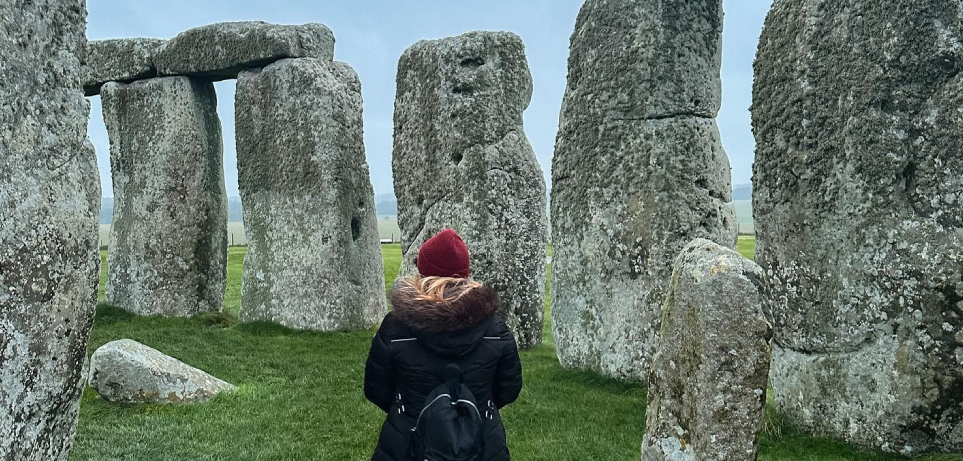
An Inner Circle tour is a special access visit that allows a small number of visitors to go inside the stone circle, usually outside normal opening hours. It is one of the most memorable ways to experience Stonehenge because you are much closer to the stones and can appreciate the scale of the monument properly.
Inner Circle access usually means:
- you enter or stand within the stone circle area under supervision;
- you visit at a restricted time, often early morning or evening;
- you must follow access rules carefully;
- you should not assume touching the stones is allowed.
Can you touch the stones during the Solstice?
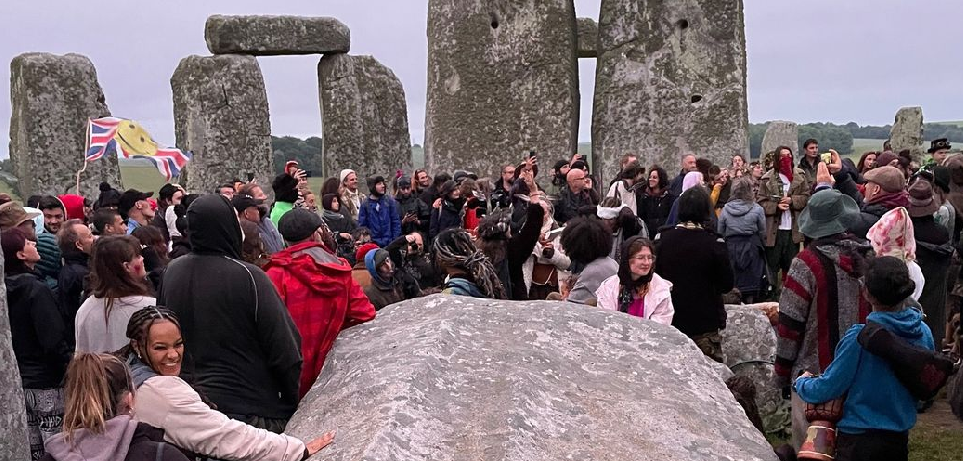
Solstice is different from a normal visit because access arrangements can change for managed celebrations. However, that does not make it a free-for-all. Stonehenge is still protected, and visitors are expected to respect the monument and follow event rules.
If your goal is a calm, close-up experience, Solstice may not be the best choice. It can be busy, atmospheric and memorable, but it is not the same as a controlled Inner Circle visit.
Best practical advice
For the closest planned visitor experience, prioritise an Inner Circle or Stone Circle access visit. For atmosphere and tradition, look at Solstice information separately.
What does “touch the stones” actually mean?
People use this phrase in different ways. Some literally want to place a hand on one of the stones. Others really mean they want to walk among the stones, stand inside the circle, or get close enough for a once-in-a-lifetime photo.
What people often mean
- Can I walk inside the stone circle?
- Can I get close to Stonehenge?
- Can I book special access?
- Can I experience Stonehenge without the daytime crowds?
What you should expect
- Normal tickets keep you outside the circle.
- Special access gets you closer or inside the circle.
- Touching is controlled and may not be allowed.
- Rules can vary depending on the visit type.
Accessibility and surface conditions
The normal Stonehenge visitor route is designed for high visitor numbers and has managed access arrangements. Special access visits can be more restrictive because they take place closer to the stones and may involve uneven ground, grass and less flexible movement around the circle.
Before booking special access
- check whether the tour is suitable for your mobility needs;
- ask whether shuttle, walking or standing time is involved;
- check whether children can join the specific tour;
- allow extra time if you are combining Stonehenge with Bath, Windsor or Lacock.
Not sure which route is right?
Use the normal ticket guide if you want the simplest visitor experience. Use the Inner Circle guide if your priority is access rather than convenience.
Alternatives if you can’t get inside the circle
Inner Circle access is limited, so it is worth having a backup plan. A normal visit can still be excellent, especially if you combine the stones with the visitor centre, exhibition, audio guide and surrounding landscape.
Touching Stonehenge FAQs
Can you touch Stonehenge on a normal ticket?
No. A normal daytime Stonehenge ticket does not allow visitors to touch the stones or enter the stone circle. You view the monument from the managed visitor route.
Can you go inside the stones at Stonehenge?
Yes, but only on certain authorised special access or Inner Circle visits. These are separate from standard daytime admission and usually need to be booked in advance.
Can you touch the stones on an Inner Circle tour?
You should not assume so. Inner Circle access gets you much closer and may take you inside the stone circle, but touching is restricted and depends on the rules of the specific visit.
What is the best way to get closest to Stonehenge?
The best option is usually an authorised Inner Circle, Stone Circle access or private viewing tour. These experiences are limited and take place outside normal visiting arrangements.
Can you touch Stonehenge during the summer solstice?
Solstice access is different from a normal visit, but Stonehenge is still protected. Visitors are expected to respect the monument and follow event rules.
What happens if you touch Stonehenge without permission?
You may be challenged by staff or removed from the site. Stonehenge is a protected monument, and visitor rules are taken seriously.
Is Inner Circle access worth it if you cannot touch the stones?
For many visitors, yes. The real value is standing inside or very close to the stone circle, seeing the scale of the stones properly, and experiencing Stonehenge without the standard daytime crowds.
Want the closest possible Stonehenge experience?
Start with the Inner Circle guide if your priority is getting close to the stones. Use the tickets guide if you want the simplest standard visitor route.