
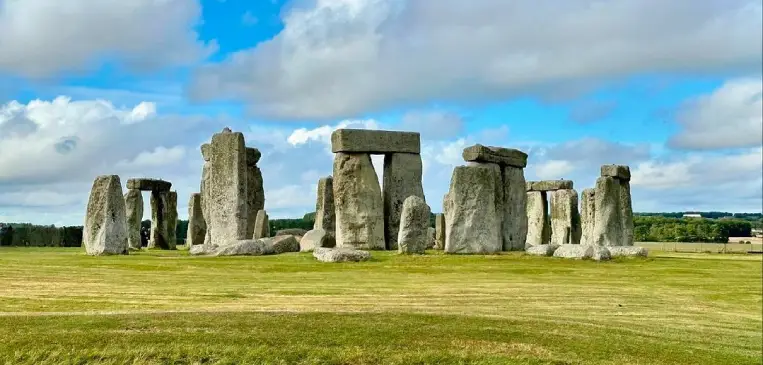

Published 21 October 2022; updated 10 March 2026


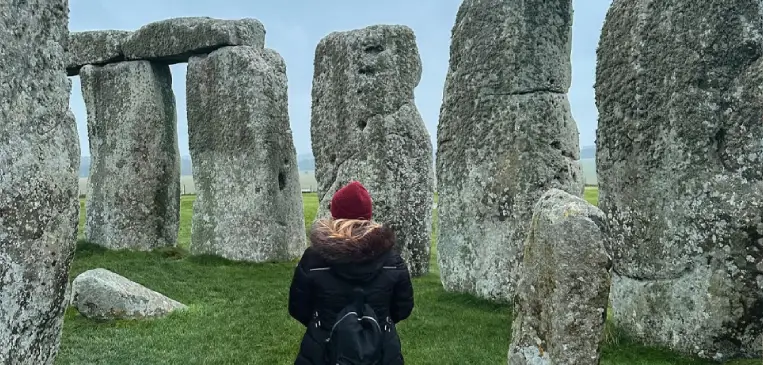
Stonehenge is one of the most famous prehistoric monuments in the world. Located on Salisbury Plain in Wiltshire, England, the ancient stone circle attracts more than a million visitors each year and has fascinated historians, archaeologists, and travellers for centuries.
The history of Stonehenge stretches back over 5,000 years, making it older than the Egyptian pyramids and one of the most important archaeological sites in Europe.
Despite decades of research, many mysteries still surround the monument. Archaeologists continue to debate who built Stonehenge, how the enormous stones were transported, and why the structure was constructed in the first place.
In this guide we explore the complete history of Stonehenge, from its earliest beginnings in the Neolithic period through to modern archaeological discoveries that are still revealing new secrets about this remarkable monument.
What Is Stonehenge?
Stonehenge is a prehistoric stone circle made up of massive standing stones arranged in a carefully designed formation.
The monument consists primarily of two types of stones:
- Sarsen stones – large sandstone blocks forming the outer circle
- Bluestones – smaller stones transported from Wales
The tallest stones stand more than 4 metres high and weigh up to 25 tonnes.
Today, Stonehenge is part of a much larger prehistoric landscape that includes burial mounds, ceremonial avenues, and nearby monuments such as Woodhenge and Durrington Walls.
Visitors exploring the monument can learn about this wider landscape at the visitor centre or by joining a guided Stonehenge tour from London, which explains the monument’s history in detail.
When Was Stonehenge Built?
Stonehenge was not built during a single period. Instead, the monument developed over many centuries.
Archaeologists believe construction began around 3000 BC and continued for roughly 1,500 years.
Over this long period the monument went through several major phases of development.
Stonehenge Timeline
The history of Stonehenge can be divided into several key stages.
| Period | Event |
|---|---|
| 3000 BC | Circular earthwork enclosure built |
| 2900 BC | Aubrey Holes created, possibly holding wooden posts |
| 2600 BC | Bluestones transported from Wales |
| 2500 BC | Large sarsen stones erected |
| 2400 BC | Trilithon horseshoe completed |
| 1600 BC | Final alterations made |
This timeline shows how the monument evolved gradually rather than being built all at once.
The First Stage of Stonehenge (3000 BC)
The earliest form of Stonehenge looked very different from the stone circle we see today.
During the first stage, Neolithic communities constructed a circular earthwork enclosure consisting of a large ditch and bank roughly 110 metres across.
Inside this enclosure archaeologists discovered 56 pits known as the Aubrey Holes.
These pits may have contained wooden posts or early stones, although their exact purpose remains uncertain.
Evidence from excavations also suggests that Stonehenge was used as a cremation burial site during this early phase.
Human remains dating back more than 4,500 years have been discovered within the enclosure.
The Arrival of the Bluestones
Around 2600 BC, the monument began to transform dramatically when builders brought smaller stones known as bluestones to the site.
These stones originated in the Preseli Hills of southwest Wales, more than 200 kilometres away.
Transporting these stones would have required enormous effort and coordination.
Archaeologists believe the builders may have used:
- wooden sledges
- rollers
- ropes made from plant fibres
- river transport
The arrival of the bluestones marked the beginning of Stonehenge’s transformation into a major ceremonial monument.
The Sarsen Stone Circle
The most recognisable stage of Stonehenge’s history occurred when the massive sarsen stones were erected around 2500 BC.
These stones were transported from the Marlborough Downs, approximately 30 kilometres north of the site.
The builders arranged the stones into two major formations:
- a large outer circle
- a horseshoe-shaped arrangement of trilithons
Each trilithon consists of two upright stones supporting a horizontal lintel.
The stones were carefully shaped and joined together using techniques similar to woodworking joints, demonstrating the remarkable engineering skills of the Neolithic builders.
Who Built Stonehenge?
The builders of Stonehenge were Neolithic farming communities living in Britain thousands of years ago.
Archaeological evidence suggests that several different cultural groups contributed to the monument over time.
These groups likely included:
- early Neolithic farmers
- the Beaker culture
- later Bronze Age societies
Excavations at nearby sites such as Durrington Walls have revealed evidence of large settlements where hundreds or even thousands of people may have lived while constructing the monument.
These discoveries suggest Stonehenge was part of a much larger ceremonial landscape used for gatherings, rituals, and seasonal celebrations.
How Were the Stones Transported?
One of the greatest mysteries surrounding Stonehenge is how ancient people managed to move the enormous stones used in the monument.
The largest sarsen stones weigh up to 25 tonnes, while the bluestones weigh several tonnes each.
Although no written records exist, archaeologists have developed several theories about how the stones may have been transported.
Possible methods include:
- dragging stones on wooden sledges
- rolling stones on logs
- transporting stones along rivers
- using large teams of workers pulling ropes
Experimental archaeology has demonstrated that even very large stones can be moved using relatively simple tools when enough people work together.
Why Was Stonehenge Built?
Perhaps the most debated question in Stonehenge history is why the monument was built.
Several theories have been proposed.
A Ceremonial or Religious Monument
Many archaeologists believe Stonehenge was used for ceremonies and rituals.
The circular design of the monument and its position within a larger ceremonial landscape suggest that it played an important role in the spiritual life of Neolithic communities.
An Astronomical Observatory
Stonehenge is famously aligned with the summer solstice sunrise and the winter solstice sunset.
During the summer solstice, the sun rises directly above the Heel Stone, creating a spectacular alignment that still attracts thousands of visitors every year.
This alignment suggests that Stonehenge may have been used to track the changing seasons.
A Burial Ground
Excavations have revealed that Stonehenge was used as a burial site during its earliest stages.
This has led some researchers to suggest the monument may have been built as a place to honour the dead or commemorate ancestors.
A Place of Healing
Another theory suggests Stonehenge may have been a centre for healing.
Some archaeologists believe the bluestones were thought to have special properties, attracting people from across Britain to the site.
Stonehenge and the Surrounding Landscape
Stonehenge is not an isolated monument. Instead, it forms the centre of a vast prehistoric landscape filled with ancient structures.
Nearby sites include:
- Woodhenge, a circular arrangement of timber posts
- Durrington Walls, one of the largest Neolithic settlements in Britain
- the River Avon, which may have been used for ceremonial processions
These monuments suggest that Stonehenge was part of a complex network of ritual sites connected by pathways and waterways.
You can learn more about one of these nearby monuments in our guide to Woodhenge near Stonehenge.
Modern Archaeological Discoveries
Even after centuries of study, Stonehenge continues to reveal new secrets.
Recent archaeological projects using advanced technologies such as ground-penetrating radar have discovered previously unknown features beneath the surrounding landscape.
These discoveries include:
- buried pits and earthworks
- hidden monuments
- evidence of ancient settlements
These findings show that the Stonehenge landscape was far more complex than previously believed.
Visiting Stonehenge Today
Today Stonehenge is a UNESCO World Heritage Site and one of the most visited historic landmarks in the United Kingdom.
Visitors can explore the monument and learn about its history at the modern visitor centre, which includes:
- archaeological exhibitions
- reconstructed Neolithic houses
- artefacts discovered during excavations
If you are planning a visit, it is usually best to book Stonehenge tickets in advance, especially during the busy summer months.
Many travellers also choose to visit as part of a Stonehenge tour from London, which provides transport and expert commentary about the monument’s fascinating history.
Why Stonehenge Still Fascinates the World
More than five thousand years after its construction, Stonehenge continues to captivate people around the world.
Its massive stones, mysterious origins, and precise alignments make it one of the most remarkable monuments ever built by ancient humans.
Although many questions remain unanswered, ongoing archaeological research is gradually revealing new insights into the people who built Stonehenge and the culture that created this extraordinary monument.
Frequently Asked Questions
Stonehenge was first constructed around 3000 BC, making it over 5,000 years old.
The monument was built by Neolithic farming communities who lived in Britain during the late Stone Age.
The exact purpose remains uncertain, but theories suggest it was used for religious ceremonies, astronomical observations, and burial rituals.
Archaeologists believe the stones were transported using sledges, rollers, ropes, and possibly rivers.
Yes. The earliest phase of Stonehenge predates the Great Pyramid of Giza by several centuries.
Tours you might be interested in…
Adults: £58 Child: £55
Our popular half-day tour…
Direct Stonehenge Express Tour from London

Adults: £94 Child: £85
Two of our most popular destinations in one tour…
Stonehenge and Bath Tour

Adults: £85 Child: £79
Three of our most popular destinations in one tour…
Windsor, Stonehenge and Bath Tour

Adults: £135 Child: £126
An inner circle tour of Stonehenge and the UK…
Stonehenge Inner Circle Tour, Bath and Lacock Day Trip with Dinner

Adults: £102 Child: £99