

Published 5 August 2022; updated 11 March 2026

Avebury is one of the most remarkable prehistoric monuments in the world and home to the largest stone circle ever built. Located in Wiltshire in southwest England, the monument forms part of the Stonehenge and Avebury UNESCO World Heritage Site and dates back more than 4,500 years.
While Stonehenge is globally famous, many historians and archaeologists believe Avebury is actually the more impressive site due to its enormous scale and the way the prehistoric stones surround an entire modern village. Unlike Stonehenge, where visitors must remain on designated paths, Avebury allows people to walk freely among the stones. This unique access makes it one of the most immersive prehistoric landscapes in Britain.
Today Avebury attracts historians, archaeologists, and travellers interested in ancient history, Neolithic monuments, and the mysterious cultures that built some of the earliest ceremonial structures in Europe.

© Historic England (illustration by Ivan Lapper)
What Is Avebury?
Avebury is a Neolithic henge monument containing a vast circular earthwork and multiple stone circles constructed from massive sarsen stones. The monument is significantly larger than Stonehenge and covers an area of approximately 28 acres. The site consists of several main components:
- A huge circular earthwork bank and ditch
- A massive outer stone circle
- Two smaller inner stone circles
- A ceremonial avenue of stones leading away from the site
- Several nearby prehistoric monuments
The scale of the monument suggests it was an extremely important ceremonial and ritual centre for Neolithic communities living in southern Britain. Today the small village of Avebury sits partly inside the ancient henge, creating one of the most unusual archaeological landscapes in the world.
Adults: £182 Child: £162
Escorted day tour from London…
Stonehenge, Glastonbury and Avebury – Small Group Tour
Where Is Avebury Located?
Avebury is located in the county of Wiltshire in southern England, approximately:
- 20 miles north of Salisbury
- 8 miles west of Marlborough
- 25 miles from Bath
- 75 miles from London
The site lies on the edge of the Marlborough Downs and forms part of a much larger prehistoric landscape that includes burial mounds, ceremonial avenues, and other Neolithic monuments. Avebury is often visited together with nearby sites such as:
- Stonehenge
- Silbury Hill
- West Kennet Long Barrow
- Windmill Hill
Because these sites are relatively close together, many travellers explore them on the same trip. If you’re planning to see Stonehenge during your visit, it’s worth checking Stonehenge ticket availability in advance, as the monument often sells out during peak seasons.
When Was Avebury Built?
Archaeological evidence suggests that Avebury was constructed between 2600 BC and 2400 BC during the late Neolithic period. This places the construction of the monument at roughly the same time as the later stages of Stonehenge. However, the wider landscape around Avebury had already been used by prehistoric communities for centuries before the stone circles were erected. Excavations have revealed evidence of earlier activity dating back to around 3000 BC, suggesting that the area had long been considered a significant ceremonial location.
Avebury Timeline
The development of Avebury took place over many centuries.
| Date | Event |
|---|---|
| 3000 BC | Early Neolithic activity begins in the area |
| 2600 BC | Construction of the henge earthwork begins |
| 2500 BC | Large sarsen stones erected |
| Bronze Age | Continued ceremonial use of the landscape |
| Medieval period | Many stones destroyed or buried |
| 1930s | Archaeologist Alexander Keiller begins restoration |
This long history shows that Avebury evolved gradually as an important ritual centre rather than being built during a single construction phase.
The Avebury Henge
The most striking feature of the monument is the enormous circular earthwork known as a henge. The henge consists of a deep ditch and a large bank forming a circle approximately 420 metres in diameter. Interestingly, the ditch lies inside the bank rather than outside it. This suggests the structure was not designed for defence but instead served a ceremonial or symbolic purpose.
Creating the henge would have required enormous effort from the Neolithic communities who built it. Archaeologists estimate that more than 200,000 tonnes of chalk were excavated using only simple tools made from stone, wood, and antler.
The Avebury Stone Circles
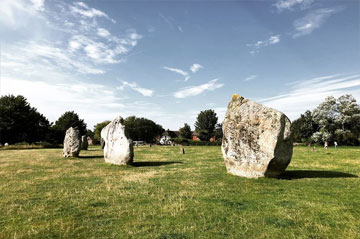
Inside the henge stands the largest prehistoric stone circle ever constructed. Originally the circle contained around 98 massive sarsen stones, many weighing more than 40 tonnes. The stones were arranged in a ring roughly 330 metres in diameter, making it the largest stone circle in Britain and one of the largest anywhere in the world. Within this huge outer circle are two smaller inner circles.
The Northern Inner Circle
The northern circle originally contained around 27 stones and may have served as a ceremonial gathering area. Some archaeologists believe a large central stone once stood here, possibly representing an important symbolic marker.
The Southern Inner Circle
The southern circle contained a distinctive stone known as the Obelisk, which may have served as a focal point for rituals. The arrangement of stones in this circle suggests it may have been used for ceremonies involving large groups of people.
How Were the Stones Transported?
The stones used at Avebury are made of sarsen sandstone, which originates from the nearby Marlborough Downs. Although the quarries were relatively close, transporting stones weighing up to 40 tonnes would still have required enormous effort.
Archaeologists believe the stones were moved using a combination of:
- wooden sledges
- rollers made from tree trunks
- ropes made from plant fibres
- teams of hundreds of workers
Experimental archaeology has demonstrated that large stones can be transported surprisingly efficiently when enough people work together.
Why Was Avebury Built?
The exact purpose of Avebury remains uncertain, but archaeologists have proposed several theories.
A Ceremonial Gathering Place
Many researchers believe Avebury was used for large communal gatherings, festivals, and rituals. The enormous size of the monument suggests it was capable of hosting large numbers of people from surrounding communities.
A Sacred Ritual Landscape
Avebury sits within a network of prehistoric monuments that appear to have been connected by ceremonial pathways and processions. These include:
- The Avenue
- Silbury Hill
- West Kennet Long Barrow
- Windmill Hill
Together these monuments form one of the most significant ritual landscapes in prehistoric Europe.
Astronomical Alignments
Some researchers have suggested that certain stones at Avebury may align with solar or lunar events. While the astronomical connections are less precise than those at Stonehenge, they may still have played an important symbolic role.
The Avebury Landscape
The surrounding area contains several important prehistoric sites that help explain the significance of the monument.
Silbury Hill
Silbury Hill is the largest prehistoric mound in Europe and rises approximately 30 metres high. Constructed around 2400 BC, the mound required millions of tonnes of chalk to build. Although its purpose remains unknown, it may have been used for ceremonies or symbolic rituals.
West Kennet Long Barrow
West Kennet Long Barrow is one of the best preserved Neolithic burial chambers in Britain. Dating back more than 5,000 years, the tomb contains several burial chambers where the remains of prehistoric individuals were placed. Visitors today can walk inside the chamber and experience one of the most remarkable prehistoric structures in the UK.
The Avenue
The Avenue is a ceremonial pathway lined with stones that links Avebury to nearby monuments. Archaeologists believe it may have been used for ritual processions connecting different ceremonial sites across the landscape.
Avebury vs Stonehenge
Many visitors compare Avebury with the more famous Stonehenge. Although Stonehenge receives far more tourists, the two monuments are very different.
| Feature | Avebury | Stonehenge |
|---|---|---|
| Size | Largest stone circle in the world | Smaller but more complex structure |
| Access | Visitors can walk freely among stones | Access restricted |
| Atmosphere | Quiet rural landscape | Major tourist attraction |
| Construction | Around 2600 BC | 3000–2000 BC |
Both monuments are extraordinary examples of prehistoric engineering and form part of the same World Heritage Site. If you are interested in how the two monuments are connected, you may also enjoy learning about the history of Stonehenge and how the landscape developed during the Neolithic period.
Medieval Destruction of the Stones
During the Middle Ages many of the stones at Avebury were deliberately destroyed. Local villagers believed the stones were associated with pagan rituals and superstition. Some stones were buried underground, while others were broken apart and used as building material. Fortunately, archaeologist Alexander Keiller began restoring the monument during the 1930s. His work helped identify the original positions of many stones and re-erect several that had been buried.
Visiting Avebury Today
One of the most appealing aspects of Avebury is that the stone circle is completely free to visit. Visitors can walk directly among the stones and explore the entire henge landscape. The site is managed by the National Trust and includes:
- the Alexander Keiller Museum
- a visitor centre
- walking trails around the monument
- access to nearby prehistoric sites
The relaxed atmosphere makes Avebury a very different experience from the more regulated visit to Stonehenge.
How to Get to Avebury
Avebury is easiest to reach by car, although public transport options are available. Nearby towns include:
- Marlborough
- Devizes
- Swindon
Parking is available close to the monument. Many visitors combine Avebury with a visit to Stonehenge on the same day, particularly when joining one of the Stonehenge tours from London that explores the wider prehistoric landscape of Wiltshire.

Why Avebury Is One of Britain’s Most Important Ancient Sites
Avebury remains one of the most significant prehistoric monuments in Europe. Its enormous scale, mysterious origins, and connection to a vast ceremonial landscape provide a fascinating insight into the beliefs and rituals of Neolithic Britain.
While Stonehenge may be the most famous stone circle in the world, Avebury offers something unique: the opportunity to walk freely among the stones and experience one of the largest ancient monuments ever built. For visitors interested in prehistoric Britain, archaeology, or ancient landscapes, Avebury is one of the most extraordinary sites to explore anywhere in the world.
Frequently Asked Questions
Avebury was built around 2600 BC, making it more than 4,500 years old.
Yes. Avebury is the largest stone circle in the world and far larger than Stonehenge.
Yes. Visitors are free to walk among the stones at Avebury.
Yes. Access to the stone circle itself is free, although parking charges may apply.
Yes, it is possible to walk between the sites, although there is no direct signed path for the entire route. Proper planning and navigation are recommended.
Interested in checking out some of our…
STONEHENGE TOURS BY COACH
All of our full-day and half-day London to Stonehenge Tours involve central London pick up and drop off at the end of the tour. Visitors will travel in a luxury air-conditioned coach with a knowledgable guide to assist them on their tour of the best attractions in the UK. Often it’s an early start, so you want to travel comfortably; many coaches include free wifi to keep in touch during the journeys, look up what’s to come or share your experiences online. You don’t need to worry about parking far away at Stonehenge either when travelling on one of our luxury coaches as the coach parks near the main car part and just a short walk to the visitor centre and main entrance.
