

Published 20 August 2026; updated 20 August 2026
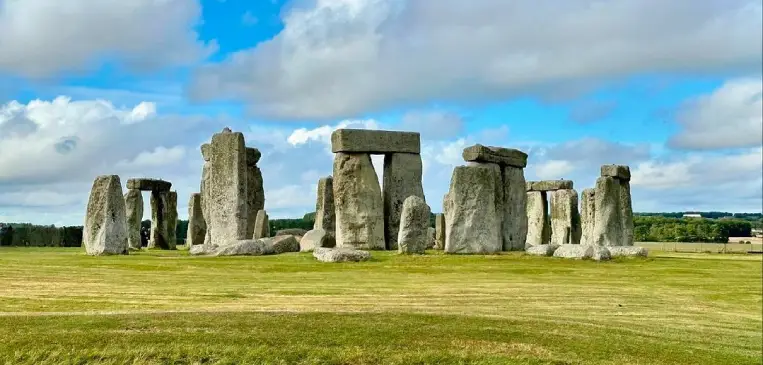
Yes, you can visit Stonehenge and the Cotswolds in one day. For the most relaxed itinerary, visit Stonehenge in the morning and continue to one or two places in the southern Cotswolds, particularly Castle Combe. Travelling as far as Bibury or Bourton-on-the-Water is possible, but creates a longer day.
Can you visit Stonehenge and the Cotswolds in one day?
Yes — particularly if you are travelling by car.
The important thing is not trying to see the whole of the Cotswolds after visiting Stonehenge. The Cotswolds covers a large area across several counties, so a better plan is to choose one part of it and enjoy one or two places properly.
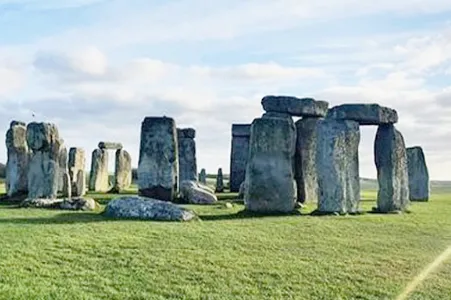
Stonehenge makes a natural first stop before continuing north towards the Cotswolds.
Relaxed option
Stonehenge → Castle Combe
Best if you want plenty of time at Stonehenge and an attractive Cotswolds stop without spending most of the day driving.
Fuller Cotswolds day
Stonehenge → Bibury → Bourton-on-the-Water
Best if seeing the famous central Cotswolds villages matters more than keeping the day relaxed.
How far are the Cotswolds from Stonehenge?
There isn’t one single distance because the Cotswolds is an area rather than one town. The southern Cotswolds are significantly closer to Stonehenge than villages further north.
| Destination | Approx. drive | Best for |
|---|---|---|
| Castle Combe | Around 50–60 minutes | Easiest Cotswolds addition |
| Cirencester | Around 1 hour | Historic market town |
| Bibury | Around 1 hr 10 mins | Classic village scenery |
| Bourton-on-the-Water | Around 1 hr 20 mins | More shops, cafés and attractions |
| Stow-on-the-Wold | Around 1 hr 30 mins | Longer trip or overnight stay |

Best Cotswolds places to combine with Stonehenge
1. Castle Combe
Castle Combe sits in the southern Cotswolds and is one of the easiest well-known villages to combine with Stonehenge.
Its traditional stone cottages, small bridge and compact historic centre give you a recognisable Cotswolds experience without adding hours of extra driving.
2. Bibury
Bibury is one of the Cotswolds’ best-known villages, particularly because of Arlington Row and its setting beside the River Coln.
It is further from Stonehenge than Castle Combe, but still achievable as part of a full-day road trip.

3. Bourton-on-the-Water
Bourton-on-the-Water is one of the Cotswolds’ most popular destinations, with the River Windrush running through the centre beneath its small stone bridges.
There is more to do here than in a smaller village, but that also means allowing more time and accepting a longer drive from Stonehenge.
Suggested time: 2–3 hours4. Cirencester
Often described as the capital of the Cotswolds, Cirencester offers historic streets, shops and cafés alongside its Roman heritage.
It is a useful choice if you prefer historic towns to small villages or are continuing further into the Cotswolds.
5. Stow-on-the-Wold
Stow-on-the-Wold sits further into the northern Cotswolds and is better suited to visitors continuing into the area rather than rushing back to London the same evening.
Its market square, independent shops and traditional pubs make it worth visiting if you have enough time.
Going deeper into the Cotswolds?
If you are staying overnight or continuing north, the wider Cotswolds and Oxfordshire area opens up many more possibilities.
Blenheim Palace can work well as part of a longer touring itinerary, but it is too ambitious to combine properly with Stonehenge and several Cotswolds villages in a single relaxed day.

A relaxed Stonehenge and Cotswolds itinerary
If this is your first visit to both areas, this is the itinerary we would choose.
Visit Stonehenge
Aim for a morning timed entry and allow roughly two to three hours for the Visitor Centre, exhibition, shuttle or walk and time around the monument.
Drive towards the Cotswolds
Leave Stonehenge and head towards Castle Combe. The journey normally takes around an hour depending on traffic.
Explore the southern Cotswolds
Spend an hour or two in Castle Combe, then decide whether to continue deeper into the Cotswolds or slow the pace.
Stonehenge and the Cotswolds from London
It is possible to visit both from London in one day, but this is where keeping the itinerary realistic matters.
Driving from central London to Stonehenge commonly takes around two hours in normal conditions. Once you add Stonehenge, the Cotswolds and the return journey, you can easily spend several hours on the road.
- Leave London early.
- Visit Stonehenge first.
- Continue towards Castle Combe rather than the northern Cotswolds.
- Have lunch or an early evening meal in the Cotswolds.
- Return to London.
Stonehenge and the Cotswolds without a car
This is much harder than travelling by car.
Stonehenge can be reached using Salisbury as the main public transport gateway. The difficulty comes when you then try to travel from Stonehenge to Cotswolds villages such as Bibury or Bourton-on-the-Water.
Option 1: Stonehenge independently
Travel by train to Salisbury, then continue to Stonehenge by the local tour bus or taxi.
Read the transport guide →Option 2: Organised tour
Look for a tour that specifically combines Stonehenge with the Cotswolds and check which villages are actually included.
Compare Stonehenge tours →Option 3: Split the trip
Visit Stonehenge on one day and use another day for the Cotswolds. This is usually the easiest option without a car.
Stonehenge + Cotswolds or Stonehenge + Bath?
Choose the Cotswolds if picturesque villages, countryside and a flexible road trip appeal to you.
Choose Bath if you prefer Roman history, Georgian architecture and a combination that is easier to arrange without driving.
Explore Stonehenge & Bath toursStonehenge and Cotswolds FAQs
Can you do Stonehenge and the Cotswolds in one day?
Yes. It is easiest by car. For a comfortable one-day itinerary, visit Stonehenge in the morning and one or two Cotswolds destinations in the afternoon.
What is the nearest Cotswolds village to Stonehenge?
Castle Combe is one of the closest well-known Cotswolds villages to Stonehenge and typically takes around an hour to reach by car.
How far is Bourton-on-the-Water from Stonehenge?
The journey is around 60 miles and commonly takes about 1 hour 20 minutes in normal traffic.
Can you get from Stonehenge to the Cotswolds by train?
There is no direct train between Stonehenge and the main Cotswolds villages. Salisbury is the main rail gateway for Stonehenge, while many Cotswolds villages are away from the rail network.
Should I visit Bath or the Cotswolds after Stonehenge?
Choose Bath for Roman history, architecture and easier public transport. Choose the Cotswolds for countryside, picturesque villages and a road-trip experience.
Sort Stonehenge first, then build the Cotswolds around it
Check timed admission, travel arrangements and tour options before deciding how much of the Cotswolds to add to your day.